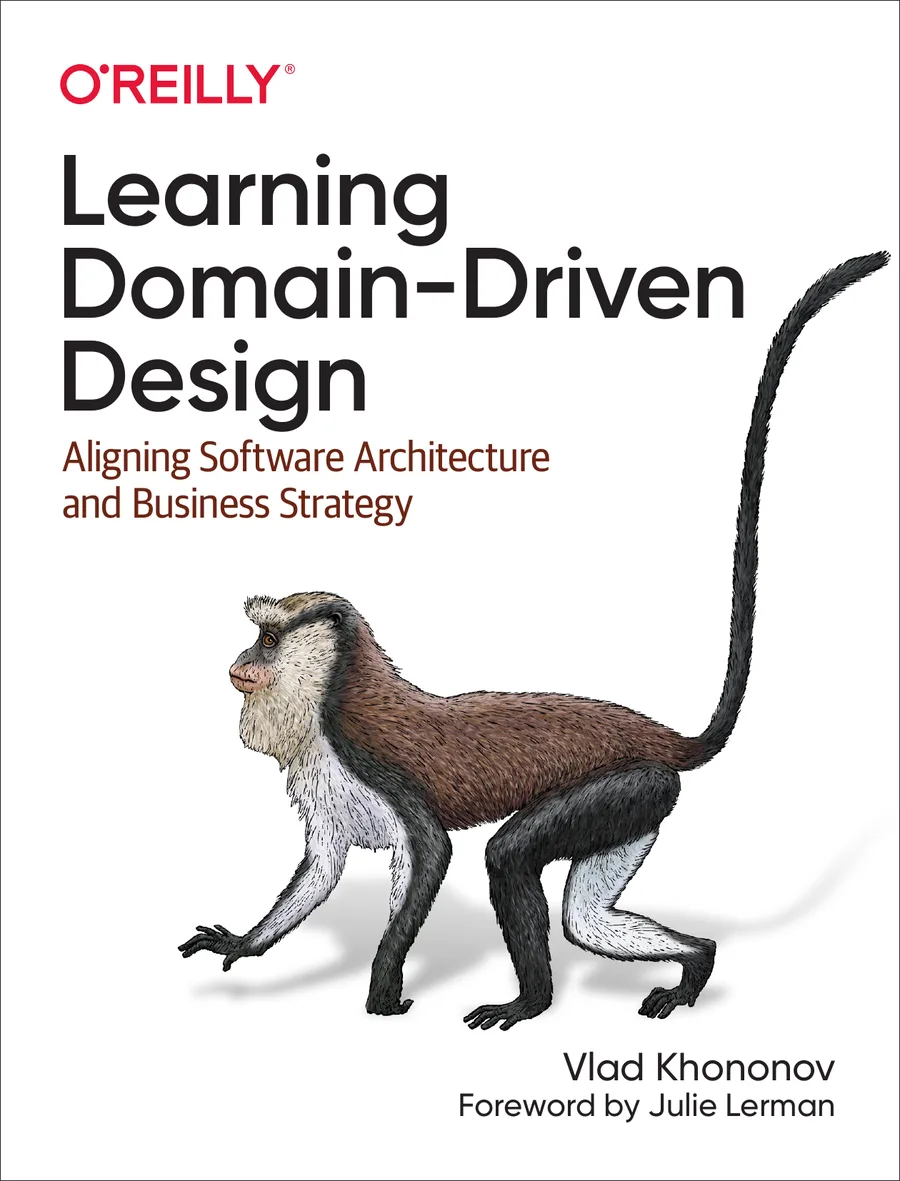
Software boundaries become easier to justify when the business problem is understood. Vlad Khononov's Learning Domain-Driven Design connects domain knowledge, shared language, and implementation choices, offering a practical way to reason about where complexity belongs.
Models and Boundaries
The book covers core, supporting, and generic subdomains; bounded contexts and their relationships; and patterns including transaction scripts, active record, domain models, Event Sourcing, CQRS, and sagas.
Its useful distinction is between an architectural option and a requirement. Simple logic may need a simple implementation; a complex model may need stronger boundaries. A term can have different meanings in different contexts, so communication between them needs an explicit translation.
When the Model Needs Attention
Engineers facing growing business logic, unclear ownership, or accidental coupling will find a vocabulary for examining those problems. The domain and language chapters provide a foundation before introducing more services. The patterns help when they explain a boundary and match the complexity of the work.
Get the Book
- O'Reilly: Learning Domain-Driven Design